Sleep Medicine
Sleep Apnea Treatment in San Antonio: CPAP and Alternatives
CPAP is effective, but it is not the only option for obstructive sleep apnea. Treatment should match the type and severity of apnea, anatomy, symptoms, health risks, and what a patient can use consistently.
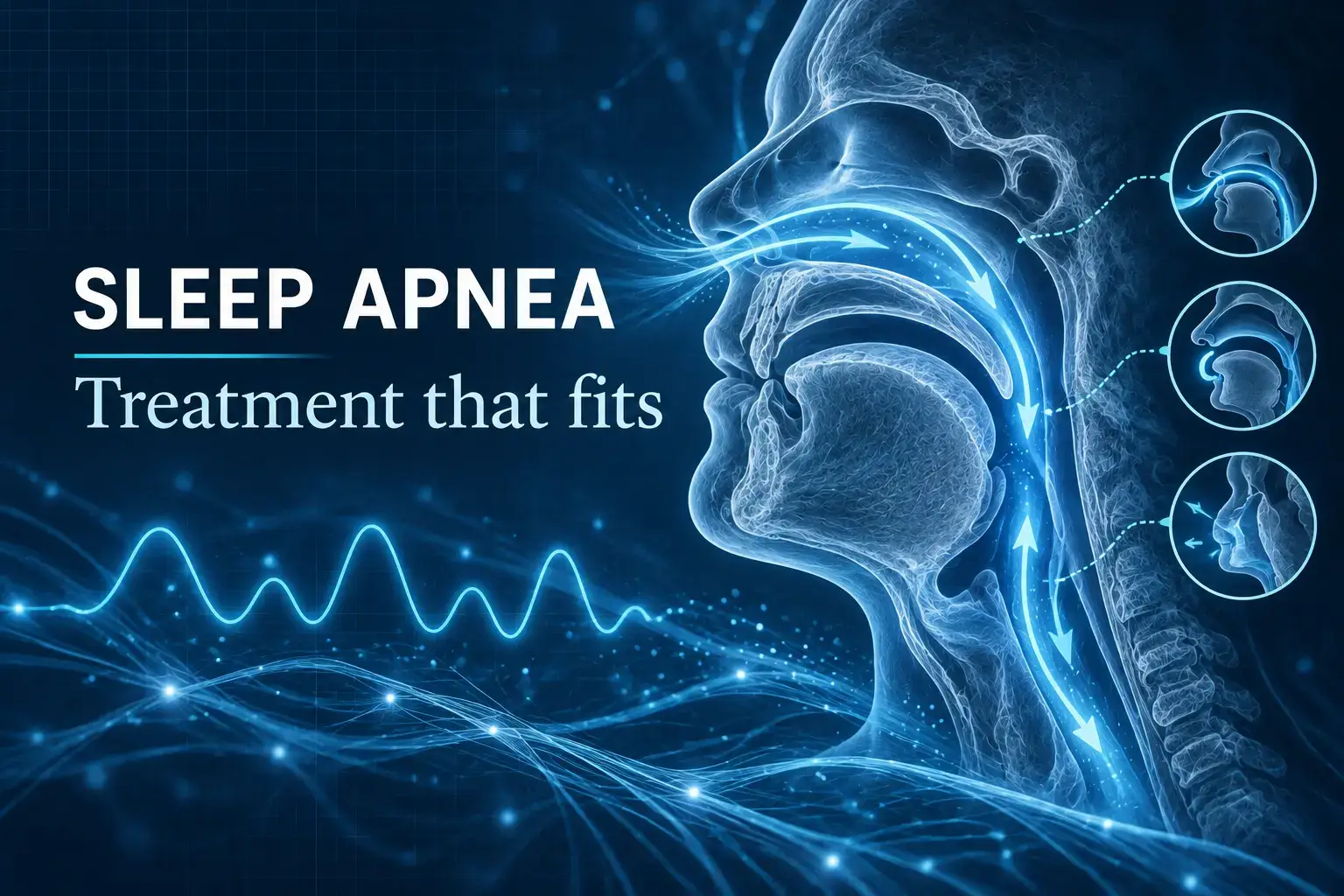
Sleep apnea treatment is not one-size-fits-all. For many people, positive airway pressure is the most reliable way to keep the airway open. Others may be appropriate candidates for a custom oral appliance, positional therapy, weight-focused care, surgery, hypoglossal-nerve stimulation, or a coordinated combination.
People searching for sleep apnea treatment in San Antonio should begin with a confirmed diagnosis and a clear understanding of the type and severity of apnea. An alternative that sounds easier is not necessarily the right alternative for a particular airway or medical history.
Start with the correct diagnosis
Obstructive sleep apnea occurs when the upper airway repeatedly narrows or closes during sleep. Central sleep apnea involves reduced or absent breathing effort and requires a different evaluation. Some people have both patterns.
A sleep study helps establish event type, frequency, oxygen effects, position, and other features. Symptoms, anatomy, body weight, heart and lung health, medication use, and previous treatment all influence the plan.
Treatment goals may include reducing breathing events and oxygen drops, improving sleepiness and quality of life, controlling snoring, and addressing relevant cardiovascular or safety risks. Objective follow-up matters because feeling better does not always prove that apnea is adequately controlled.
CPAP and other positive airway pressure therapy
Continuous positive airway pressure, or CPAP, delivers air through a mask to keep the airway open. It is effective across a broad range of obstructive sleep apnea severity when used consistently.
Early problems are common but often solvable. A poor mask seal, nasal dryness, pressure discomfort, skin irritation, or difficulty exhaling can make the first weeks frustrating. The answer may be a different mask, humidification, pressure adjustment, ramp settings, treatment of nasal congestion, or a different PAP mode when clinically appropriate.
Do not judge success only by hours of use. A PAP download includes residual event index, leak, pressure, and usage patterns. Understanding a CPAP report can help turn those numbers into useful questions for follow-up.
Oral appliance therapy
A custom mandibular-advancement device holds the lower jaw forward to help stabilize the airway. It may be appropriate for selected adults with obstructive sleep apnea who prefer an alternative to CPAP or cannot tolerate it.
An oral appliance should be fitted and adjusted by a qualified dental professional working with the sleep clinician. Over-the-counter anti-snoring devices are not equivalent to a custom, titratable appliance. Dental health, jaw symptoms, anatomy, apnea severity, and patient preference affect candidacy.
Follow-up sleep testing is important after the device has been adjusted. Snoring may improve before breathing and oxygen are fully controlled. Brainology's pathway combines sleep-physician oversight, qualified dental fitting, and objective confirmation.
Positional therapy
Some people have substantially more apnea while sleeping on their back. Positional therapy uses behavior or a device to encourage side sleeping. It may be useful alone in selected position-dependent cases or as part of a broader plan.
Position should be documented rather than assumed. If events remain frequent while side sleeping, positional therapy alone is unlikely to be sufficient. Follow-up testing can show whether it actually controls the disorder.
Weight-focused care
Excess weight can increase upper-airway collapsibility, and weight reduction can improve obstructive sleep apnea for many people. The size of the effect varies, and not every person with sleep apnea has overweight or obesity.
Weight management may involve nutrition, physical activity, behavior support, medication, or bariatric surgery when appropriate. It should not become a reason to delay effective airway treatment. Many patients need apnea therapy while weight-focused care is underway, followed by reassessment if weight changes substantially.
Surgery and hypoglossal-nerve stimulation
Anatomy-directed procedures may be considered when non-surgical treatment is inadequate or when a specific obstruction can be corrected. Options differ widely, from selected nasal or throat procedures to jaw advancement.
Hypoglossal-nerve stimulation, commonly known by the brand Inspire, uses an implanted device to activate muscles that help keep the airway open. It is intended for selected adults with moderate-to-severe obstructive sleep apnea who meet formal eligibility criteria and have difficulty using PAP. Evaluation includes an updated sleep study and airway assessment; it is not appropriate for everyone.
Brainology also offers NightLase, a non-surgical laser protocol directed at selected soft-palate and upper-airway tissues. It may reduce snoring and support carefully selected patients, but candidacy, response, and durability vary. It should not be presented as a guaranteed replacement for established apnea treatment.
What about central sleep apnea?
Central and obstructive sleep apnea are not the same. Central events can be associated with heart disease, high altitude, opioids, neurological conditions, or treatment-emergent changes. Management depends on the cause and may involve a different PAP mode or treatment of an underlying condition.
The article Central Sleep Apnea Is Not the Same as Obstructive Sleep Apnea explains why copying an obstructive-apnea treatment plan can be unsafe or ineffective.
How to choose among treatments
A good treatment decision combines evidence with feasibility. Questions to discuss with a sleep clinician include:
- What type and severity of sleep apnea do I have?
- Are events worse in a particular position or sleep stage?
- How low did oxygen go, and for how long?
- Which option is most likely to control my specific pattern?
- What side effects or limitations matter for me?
- How will we confirm that treatment works?
The best treatment is both physiologically effective and sustainable. Comfort matters because unused therapy cannot help. Objective effectiveness matters because comfortable therapy that leaves significant apnea untreated is not enough.
Frequently Asked Questions
Is CPAP always the first treatment?
CPAP is a common and effective treatment, but the starting plan depends on apnea type, severity, symptoms, health risks, anatomy, and preference. Some patients are appropriate candidates for an oral appliance or another strategy.
Can an oral appliance replace CPAP?
For selected adults with obstructive sleep apnea, it can. It is not suitable for every case, and follow-up testing should confirm that it controls breathing and oxygen changes.
Does losing weight cure sleep apnea?
Weight loss can improve apnea and sometimes reduce treatment needs, but it does not guarantee a cure. Anatomy, age, airway muscle control, and other factors also contribute. Repeat evaluation is needed before stopping prescribed therapy.
How do I know treatment is working?
Improved energy or reduced snoring is encouraging, but objective data are more reliable. PAP downloads or follow-up sleep testing can confirm whether breathing events, oxygen, and leak are adequately controlled.
The bottom line
Sleep apnea care works best when diagnosis, treatment selection, and follow-up are connected. CPAP remains a highly effective option, while oral appliances, positional therapy, weight-focused care, selected procedures, and implantable therapy may fit specific patients.
Explore Brainology's sleep-apnea care or request a consultation in Shavano Park, serving the San Antonio area.
This article is for general education and does not replace a sleep physician's diagnosis or treatment plan. Do not stop prescribed therapy without medical guidance.
References
- National Heart, Lung, and Blood Institute. Sleep Apnea Treatment. Updated January 9, 2025.
- National Heart, Lung, and Blood Institute. CPAP.
- National Heart, Lung, and Blood Institute. Living With Sleep Apnea.