Sleep Medicine
Sleep Study in San Antonio: Home Test or Overnight Lab?
A home sleep apnea test and an overnight laboratory study answer different questions. The right choice depends on symptoms, medical history, the suspected disorder, and what result would change treatment.
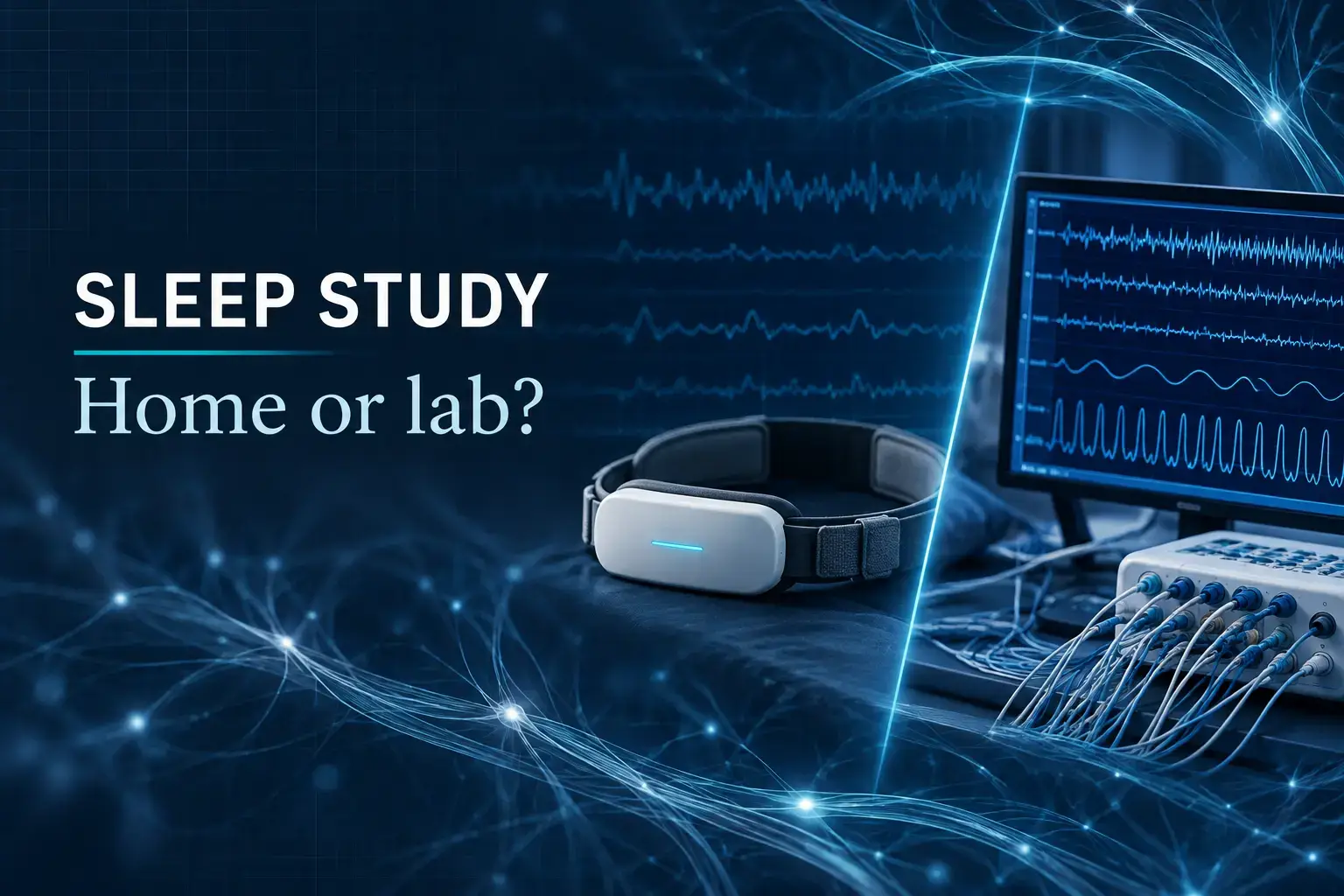
If you are considering a sleep study in San Antonio, you may be offered a home test or an overnight study in a sleep laboratory. Both can be useful, but they are not interchangeable.
A home sleep apnea test is designed primarily to look for obstructive sleep apnea in selected adults. An in-lab polysomnogram records more signals and can evaluate a broader range of sleep disorders. The right test is the one matched to the clinical question.
What does a sleep study measure?
Sleep testing records physiologic signals while you sleep. Depending on the study, those signals may include airflow, breathing effort, oxygen level, heart rate, snoring, body position, brain waves, eye movements, chin or leg muscle activity, and heart rhythm.
The National Heart, Lung, and Blood Institute notes that sleep studies can help diagnose sleep-related breathing disorders, sleep-related movement or seizure disorders, and conditions that cause extreme daytime sleepiness. A sleep physician decides which signals are needed based on symptoms and medical history.
What is a home sleep apnea test?
A home sleep apnea test uses portable equipment in your own bed. It usually records breathing, oxygen, pulse, snoring, and related signals. Brainology offers ARES testing, a validated forehead-worn system that also tracks position.
Home testing may be appropriate when an adult has a meaningful likelihood of uncomplicated moderate-to-severe obstructive sleep apnea and no major condition that makes the result harder to interpret. It is convenient, reflects sleep in a familiar environment, and usually involves fewer sensors than an in-lab study.
Its limitation is also its purpose: it is not a complete survey of every sleep disorder. Many home tests do not directly measure sleep stages, and they may underestimate severity when total recording time is longer than actual sleep time. A technically inadequate or negative home test does not always end the evaluation when symptoms remain convincing.
What is an overnight laboratory sleep study?
An in-lab polysomnogram records brain activity, eye movements, muscle tone, breathing, oxygen, heart rhythm, and limb movements under the observation of trained technologists. These additional channels show when a person is asleep, which stage of sleep they are in, and what is happening when breathing or movement events occur.
Laboratory testing may be preferred when there is concern for:
- Central sleep apnea or another complex breathing disorder
- Significant heart, lung, or neuromuscular disease
- Parasomnias, unusual movements, or possible nocturnal seizures
- Narcolepsy or another disorder requiring next-day testing
- Periodic limb movements
- Persistent symptoms after a negative or unclear home study
- A need for supervised treatment adjustment or a more complete physiologic picture
The laboratory environment is less familiar, but the expanded data can answer questions a limited home device cannot.
Is a sleep study only for snoring?
No. Loud snoring is common in obstructive sleep apnea, but it is not required. Other clues include witnessed breathing pauses, gasping, morning headaches, dry mouth, nocturia, unrefreshing sleep, excessive daytime sleepiness, concentration problems, or difficult-to-control blood pressure.
Women, older adults, and people without classic loud snoring may present with fatigue, insomnia, mood changes, or fragmented sleep. Symptoms alone cannot reliably show whether sleep apnea is present or how severe it is.
Sleep testing may also be used for suspected narcolepsy, unusual behaviors during sleep, limb movements, or other specific questions. Narcolepsy testing typically requires an overnight study followed by a daytime Multiple Sleep Latency Test, not a home apnea test.
What if insomnia is the main problem?
Chronic insomnia is usually diagnosed through history rather than a standard apnea-focused sleep study. Testing becomes useful when symptoms suggest another disorder, such as sleep apnea, periodic limb movements, a circadian problem, or unusual nocturnal behavior.
Brainology also describes a one-night forehead EEG-based profile for sleep timing and continuity. That is distinct from an apnea-focused home test. The article Do You Need a Sleep Study for Insomnia? explains when testing adds useful information and when it may not.
How a sleep physician chooses the test
The decision begins with the question, not the device. A sleep evaluation reviews symptoms, sleep schedule, medical history, medications, cardiopulmonary and neurological conditions, driving or workplace safety, and previous treatment.
The clinician may ask:
- Is obstructive sleep apnea the leading concern?
- Is the patient medically uncomplicated enough for home testing?
- Could another sleep disorder explain the symptoms?
- Would sleep staging or video change the interpretation?
- Has a previous study been negative, incomplete, or inconsistent with symptoms?
- Will the result guide PAP, an oral appliance, positional therapy, weight-focused care, or another treatment?
A test is valuable when it can change what happens next.
How to prepare for a sleep study
Follow the testing center's instructions. In general, keep your usual routine unless the clinician says otherwise. Report all medications and supplements because some affect sleep, breathing, leg movements, or daytime alertness.
Avoid changing prescription medication on your own. Ask about caffeine, alcohol, naps, hair products, and what to bring. If you use PAP, oxygen, or another nighttime device, clarify whether it should be used during the study.
For a home test, place each sensor exactly as instructed and contact the office if the device does not start correctly. One poor-quality night can delay diagnosis.
Understanding the results
Sleep apnea results often include an apnea-hypopnea index or respiratory event index, oxygen levels, event type, position, and sometimes sleep-stage information. The number should be interpreted with symptoms, medical history, and study quality.
A low event index does not explain every case of fatigue or fragmented sleep. Likewise, a higher index does not by itself select the best treatment. A physician should explain what the study did and did not measure, whether the result fits the symptoms, and whether additional testing is needed.
Frequently Asked Questions
Is a home sleep study accurate?
It can be accurate for obstructive sleep apnea in appropriately selected adults when the recording is technically adequate. It is less comprehensive than in-lab polysomnography and is not the right test for every patient or every sleep disorder.
What happens if the home test is negative?
If symptoms and clinical suspicion remain strong, an in-lab study may be appropriate. A negative home study can reflect a genuinely absent disorder, a mild or position-dependent disorder, limited sleep during the recording, or a technical issue.
Can I sleep normally with all the sensors?
Most people sleep less naturally during testing, especially the first night. The study does not require perfect sleep. An in-lab recording can still provide useful information when enough sleep is captured, and home testing may feel more familiar.
The bottom line
A home sleep apnea test is convenient and focused. An in-lab study is more comprehensive. The best sleep study is the one that measures what your symptoms and medical history require.
Explore Brainology sleep medicine and testing or request a consultation at the Shavano Park office serving the San Antonio area.
This article is educational and does not replace an individualized sleep evaluation. Do not drive when dangerously sleepy.
References
- National Heart, Lung, and Blood Institute. Sleep Studies.
- National Heart, Lung, and Blood Institute. Sleep Apnea Diagnosis.
- National Heart, Lung, and Blood Institute. Insomnia Diagnosis.