
Neurology and Brain Health
Nocturnal Seizures or Parasomnia? A San Antonio Testing Guide
Nighttime movements, screaming, confusion, or dream enactment can have different causes. Learn when EEG, video EEG, or a sleep study may help.
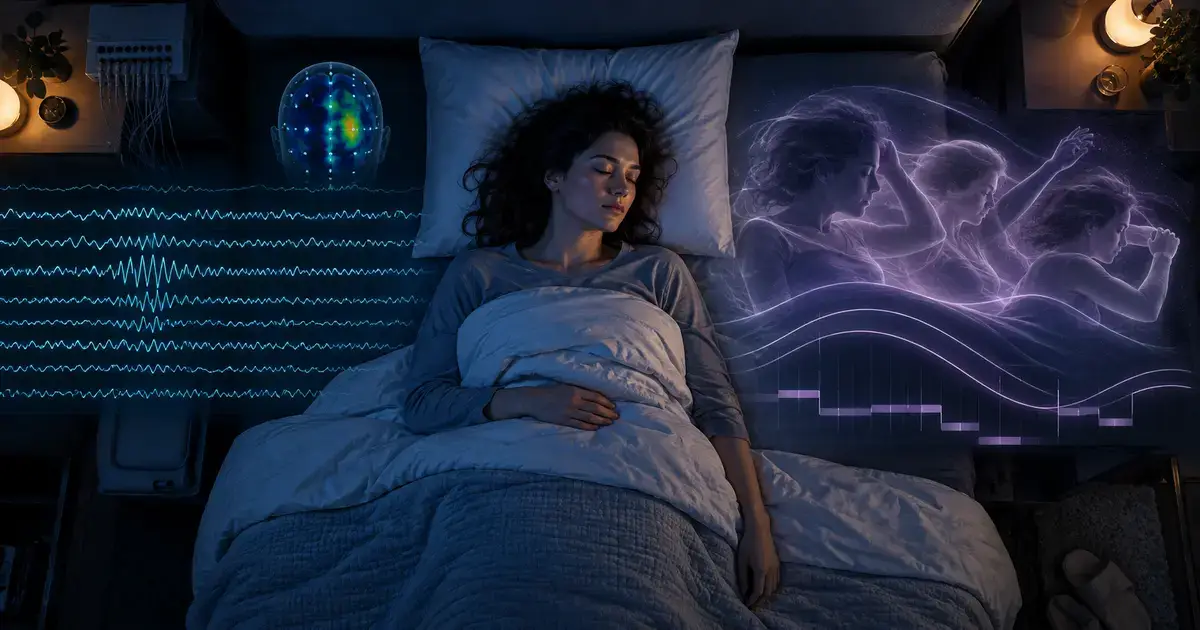
Unusual movements or behaviors during sleep can come from nocturnal seizures, parasomnias, sleep apnea-related arousals, medication effects, or other conditions. The timing, duration, repetition, awareness, movements, injuries, and recovery period help distinguish them. When the answer remains unclear, overnight polysomnography, ambulatory EEG, or inpatient video EEG may be considered based on the clinical question.
For families seeking nocturnal seizure testing in San Antonio, a short description such as “shaking at night” is not enough to select the right test. A neurologist and sleep physician can help determine whether the event looks primarily epileptic, sleep-related, or mixed.
What is a parasomnia?
Parasomnias are unwanted behaviors, movements, emotions, or experiences that arise during sleep or transitions between sleep and wakefulness. Examples include sleepwalking, confusional arousals, sleep terrors, nightmares, and REM sleep behavior disorder.
Some parasomnias are more common in childhood and occur from deep non-REM sleep. Others, such as REM sleep behavior disorder, more often begin later in life and involve loss of the normal muscle quieting that accompanies dream sleep. The age of onset and the part of the night in which events occur can provide clues.
What do nocturnal seizures look like?
Seizures arising during sleep can have many forms. They may involve sudden stiffening, rhythmic jerking, unusual posturing, repeated brief movements, abrupt sitting up, vocalization, or loss of bladder control. Some events are subtle, such as brief arousals with a stereotyped facial expression or hand movement.
Features that can raise suspicion for seizures include highly similar episodes each time, multiple brief events in one night, abrupt onset and ending, focal posturing, tongue injury, or prolonged confusion afterward. None of these features is perfect, and parasomnias can also be dramatic.
Clues that favor a non-REM parasomnia
Sleepwalking, sleep terrors, and confusional arousals often occur from deep sleep, commonly in the first part of the night. The person may appear confused, have open eyes, be difficult to redirect, and remember little the next morning. Sleep deprivation, stress, fever, alcohol, and disorders that repeatedly disrupt sleep can make events more likely.
Episodes can last several minutes and may involve complex behavior. Because injury is possible, safety measures matter even before the final diagnosis. Lock exterior doors and windows, remove weapons and sharp objects, reduce trip hazards, and avoid sleeping on a top bunk.
Clues that favor REM sleep behavior disorder
REM sleep behavior disorder often involves dream enactment later in the night, when REM sleep is more abundant. A person may punch, kick, shout, or leap from bed while experiencing an active dream. They may recall the dream when awakened.
Other problems can mimic dream enactment, including severe obstructive sleep apnea, medications, trauma-related nightmares, and seizures. Diagnosis generally requires a careful history and an in-lab video sleep study that measures muscle activity during REM sleep. A dedicated Brainology article on acting out dreams and REM sleep behavior disorder explains this pathway in more detail.
Why a normal routine EEG may not settle the question
A routine EEG samples brain activity for a limited period and often does not capture the patient's typical nighttime event. Epileptiform abnormalities can be intermittent, activated by sleep, or difficult to detect from the scalp. A normal routine EEG therefore does not rule out epilepsy.
An abnormal tracing must also be interpreted carefully. Artifacts and normal variants can be mistaken for epileptiform activity. The event history, witness account, examination, imaging when appropriate, and EEG findings must fit together. Learn more in Brainology's guide to what a normal EEG means after a possible seizure.
Which test records nighttime events?
In-lab video polysomnography
A sleep study records brain waves, eye movements, muscle activity, breathing, oxygen, heart rhythm, and synchronized video. It is useful when the main question involves parasomnia, REM sleep behavior disorder, sleep apnea, periodic limb movements, or sleep-stage timing.
Ambulatory EEG
Ambulatory EEG records brain activity for a day or longer while the patient follows much of a normal routine. It increases the chance of sampling sleep or a typical event. Some systems include video, but home video coverage may be incomplete.
Inpatient video EEG monitoring
An epilepsy monitoring unit continuously records video and EEG under supervised conditions. It can be especially useful when recurrent events remain unexplained and capturing a typical episode would change treatment. Not every patient needs inpatient monitoring.
Brainology provides both neurology and sleep medicine evaluation in San Antonio, allowing the testing question to be framed from both perspectives when symptoms overlap.
What information should a witness record?
If it is safe, note the time after sleep onset, event duration, eye and head position, breathing, skin color, which side moved first, whether movements were rhythmic, and how long confusion lasted. A smartphone video can sometimes help, but safety and first aid come before recording.
Do not restrain a person having a convulsive seizure and do not place anything in the mouth. Move hard or sharp objects away, cushion the head, turn the person on the side when possible, and time the event.
When to call 911
Call 911 for a first convulsive seizure, an event lasting longer than five minutes, repeated seizures without recovery, trouble breathing or waking afterward, serious injury, a seizure in water, or a seizure during pregnancy. Emergency care is also needed for new one-sided weakness, speech difficulty, severe headache, or persistent altered awareness.
After a possible seizure, follow driving restrictions and avoid swimming alone, heights, open flames, and dangerous machinery until a clinician has assessed the risk.
What can trigger nighttime events?
Sleep deprivation can increase the likelihood of both seizures and some parasomnias. Alcohol, recreational substances, fever, stress, untreated sleep apnea, irregular sleep schedules, and selected medications may also contribute. Do not stop prescribed medication abruptly; review it with the treating clinician.
A sleep diary can help identify timing and triggers. Include bedtime, sleep duration, alcohol or medication timing, illness, witnessed events, and next-day symptoms.
Nocturnal event evaluation in San Antonio
Patients from San Antonio, Shavano Park, Stone Oak, Boerne, and nearby communities may need a neurology pathway, a sleep pathway, or both. The best first test is the one most likely to capture the relevant signal and answer the decision at hand.
Request a Brainology consultation for recurrent unexplained nighttime movements, dream enactment, loss of awareness, or events that may require EEG or sleep testing.
This article is for education and does not replace emergency care, diagnosis, seizure precautions, or individualized medical advice.
References
- Howell MJ. Parasomnias: An Updated Review. Neurotherapeutics. 2012.
- National Institute of Neurological Disorders and Stroke. Epilepsy and Seizures.
- Centers for Disease Control and Prevention. First Aid for Seizures.
- Peltola ME, et al. Routine and Sleep EEG: Minimum Recording Standards. Clinical Neurophysiology. 2023.