Neurology and Brain Health
EMG Test in San Antonio: What to Expect and How to Prepare
Preparing for an EMG or nerve conduction study? Learn what the test measures, what it feels like, how to prepare, and what results may show.
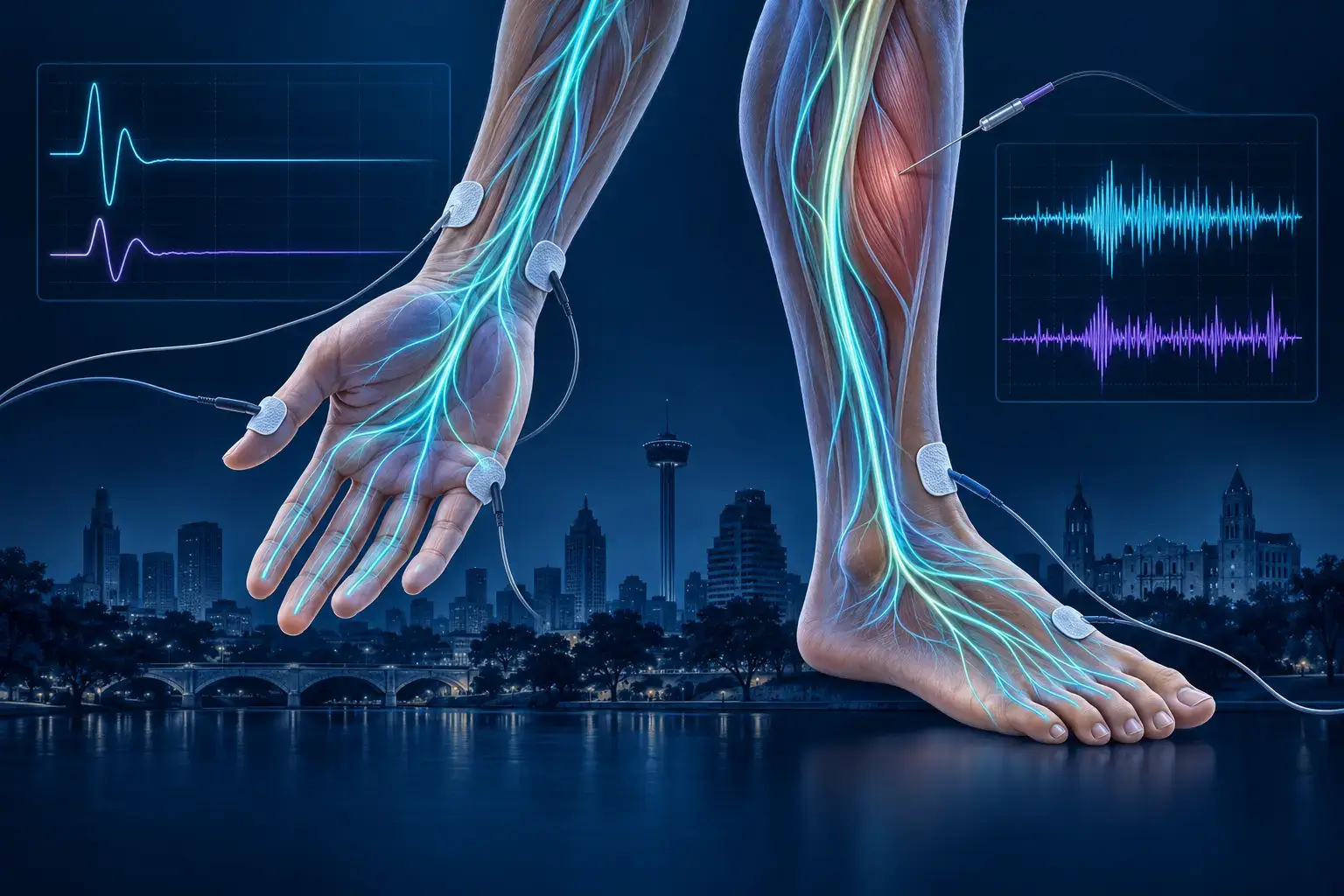
An EMG and nerve conduction study can help determine whether numbness, tingling, pain, weakness, or muscle symptoms are coming from a peripheral nerve, a nerve root, a muscle, or another part of the neuromuscular system. The study usually has two parts: surface electrodes measure how signals travel along nerves, and a very thin needle electrode records electrical activity in selected muscles. Most people can eat normally and take their usual medicines unless their clinician gives different instructions.
If you are preparing for an EMG test in San Antonio, arrive with clean skin, avoid lotions or oils, wear loose clothing, and bring a current medication list. Tell the testing physician in advance about blood thinners, a bleeding disorder, a pacemaker, defibrillator, deep-brain stimulator, or other implanted electrical device.
What are EMG and nerve conduction studies?
Electrodiagnostic testing evaluates how nerves and muscles function. A nerve conduction study, often shortened to NCS, measures how quickly and strongly an electrical signal travels along a nerve. Electromyography, or needle EMG, records electrical activity inside a muscle at rest and during gentle contraction.
The two parts answer related but different questions. Nerve conduction studies assess the peripheral nerves that carry sensation and activate muscles. Needle EMG helps show whether selected muscles are receiving normal nerve input and whether the muscle tissue itself has an abnormal electrical pattern. The findings are interpreted together with the neurological history and examination.
Why might a neurologist order an EMG?
An EMG and nerve conduction study may be considered when symptoms suggest a problem affecting peripheral nerves, nerve roots, the neuromuscular junction, or muscles. Common reasons include:
- Numbness or tingling in a hand, arm, foot, or leg
- Burning, electrical, or radiating pain
- Hand weakness, foot drop, or difficulty with certain movements
- Muscle cramping, twitching, or unexplained muscle loss
- Possible carpal tunnel syndrome or ulnar neuropathy
- Possible pinched nerve in the neck or lower back
- Evaluation of a broader peripheral neuropathy
- Selected disorders of muscle or neuromuscular transmission
The study is not a general scan of the entire nervous system. The testing plan is tailored to the symptoms, examination, and clinical question. That is why the physician may test an area that feels normal or compare both sides.
What happens during the nerve conduction portion?
Small adhesive electrodes are placed on the skin. A brief electrical pulse stimulates a nerve while other electrodes record the response. The physician measures factors such as response size, timing, and conduction speed. Several sites may be tested to help localize where a nerve is affected.
People often describe the pulses as quick taps or static-like sensations. They can feel surprising, but each pulse is brief. The intensity is adjusted to obtain an interpretable response. The study does not send continuous electricity through the body.
What happens during needle EMG?
A thin, sterile, single-use needle electrode is placed into selected muscles. No medication is injected. The electrode records the muscle's electrical activity while the muscle is relaxed and while you gently activate it. You may hear clicking or popping sounds from the machine as the electrical signals are converted to audio.
The number of muscles tested depends on the question being asked. The needle portion may cause brief discomfort and mild soreness or bruising afterward. Tell the physician if the discomfort becomes difficult to tolerate. The examination can often be adjusted while still pursuing the necessary clinical information.
How to prepare for an EMG test
Keep the skin clean and dry
Shower or bathe before the appointment if practical. Do not apply lotion, oil, cream, or perfume to the arms or legs being tested. These products can make it harder for surface electrodes to maintain good contact.
Wear loose, comfortable clothing
The physician needs access to the relevant limb and sometimes the neck, shoulder, back, or hip. Loose sleeves and pant legs are helpful. You may be asked to change into a gown when clothing limits access.
Eat normally unless instructed otherwise
Fasting is not usually required for routine EMG and nerve conduction testing. Continue prescribed medication unless the ordering or testing clinician has specifically advised a change. Do not stop a blood thinner on your own.
Bring useful clinical information
Bring a medication and supplement list, the referral or clinical question, and relevant imaging or laboratory reports if they are not already available to the practice. Be prepared to describe where symptoms began, how they spread, what makes them better or worse, and whether weakness or balance problems are present.
Report implanted devices and bleeding risks
Tell the practice before the test if you have a pacemaker, implanted cardiac defibrillator, deep-brain stimulator, spinal cord stimulator, or another implanted electrical device. Also report blood-thinning medication, a bleeding disorder, significant limb swelling, lymphedema, or a recent procedure in the area to be tested. These details do not always prevent testing, but they may affect planning.
How long does the appointment take?
The time varies with the complexity of the symptoms and the number of nerves and muscles that need evaluation. Many studies take roughly 30 to 90 minutes, but a focused study may be shorter and a complex study may take longer. Arriving early for registration and bringing accurate medical information helps the visit stay focused.
What can the results show?
Electrodiagnostic findings can help a physician distinguish among patterns such as a focal nerve entrapment, a nerve-root problem, a generalized large-fiber neuropathy, a muscle disorder, or selected disorders of neuromuscular transmission. Results may also help estimate severity, chronicity, and whether there is evidence of ongoing nerve injury.
The result is not interpreted in isolation. A technically abnormal value may not explain the symptoms, and a normal study does not exclude every neurological condition. Temperature, age, anatomy, prior injury, and the specific nerves and muscles sampled can affect interpretation.
Can an EMG be normal when burning or tingling is real?
Yes. Standard nerve conduction studies primarily evaluate larger nerve fibers. Small-fiber neuropathy can cause burning pain, temperature sensitivity, or altered pinprick sensation while routine nerve conduction and needle EMG findings remain normal. Our related article explains why burning feet can occur despite a normal EMG.
A normal study can still be useful because it narrows the possibilities and guides the next step. Depending on the history and examination, a neurologist may consider laboratory testing, imaging, skin biopsy, autonomic testing, or evaluation for a non-neurological cause.
When numbness or weakness needs urgent care
EMG is generally an outpatient diagnostic test, not an emergency test. Call 911 for sudden one-sided weakness or numbness, facial droop, speech difficulty, severe new imbalance, or another possible stroke symptom. Seek urgent evaluation for rapidly progressive weakness, new difficulty breathing or swallowing, loss of bladder or bowel control with severe back pain or leg weakness, or symptoms following major trauma.
EMG testing in San Antonio
Brainology provides physician-directed EMG and nerve conduction studies in San Antonio for appropriate neurological questions. The testing strategy is based on the clinical history and examination rather than a one-size-fits-all protocol. Patients from San Antonio, Shavano Park, and nearby communities can also access a broader neurology evaluation when the source of numbness, pain, or weakness remains unclear.
If your symptoms involve both feet, our guide to numbness, tingling, and peripheral neuropathy explains why blood work, examination, and other testing may be needed alongside electrodiagnostic testing.
Frequently asked questions
Does an EMG use anesthesia?
Routine needle EMG generally does not require anesthesia. The physician needs to record natural electrical activity from the muscle, and numbing medication is not usually part of the procedure.
Can I drive after an EMG?
Most people can resume usual activities and drive afterward. Mild muscle soreness or small bruises can occur. Ask the testing clinician about individual restrictions if you have another condition or procedure planned the same day.
Will I receive results immediately?
The physician may be able to discuss preliminary findings after the study, but the complete interpretation must integrate all measurements with the clinical question. The final report is sent according to the practice's reporting process.
The bottom line
EMG and nerve conduction testing can help localize and characterize many peripheral nerve and muscle problems. Preparation is simple: keep the skin free of lotion, wear accessible clothing, bring your medication list, and report implanted devices or bleeding risks. The most useful study is one designed around a focused clinical question and interpreted with the neurological examination.
Request a Brainology consultation or call 210-686-5000 to ask whether neurological evaluation or electrodiagnostic testing may be appropriate.
This article is for general education and does not replace emergency care, diagnosis, or individualized medical advice. Testing recommendations and preparation instructions may differ based on your medical history and the clinical question.
References
- National Library of Medicine. Electromyography (EMG) and Nerve Conduction Studies. MedlinePlus.
- American Association of Neuromuscular & Electrodiagnostic Medicine. Patient Information: Electrodiagnostic Testing.
- National Institute of Neurological Disorders and Stroke. Peripheral Neuropathy.
- National Institute of Neurological Disorders and Stroke. Neurological Diagnostic Tests and Procedures.