Neurology and Brain Health
Numbness and Tingling in Your Feet: When It Could Be Peripheral Neuropathy
Tingling, burning, or numbness in the feet can come from many conditions. Peripheral neuropathy is one possibility, but identifying the pattern and cause is essential because evaluation and treatment are not one-size-fits-all.
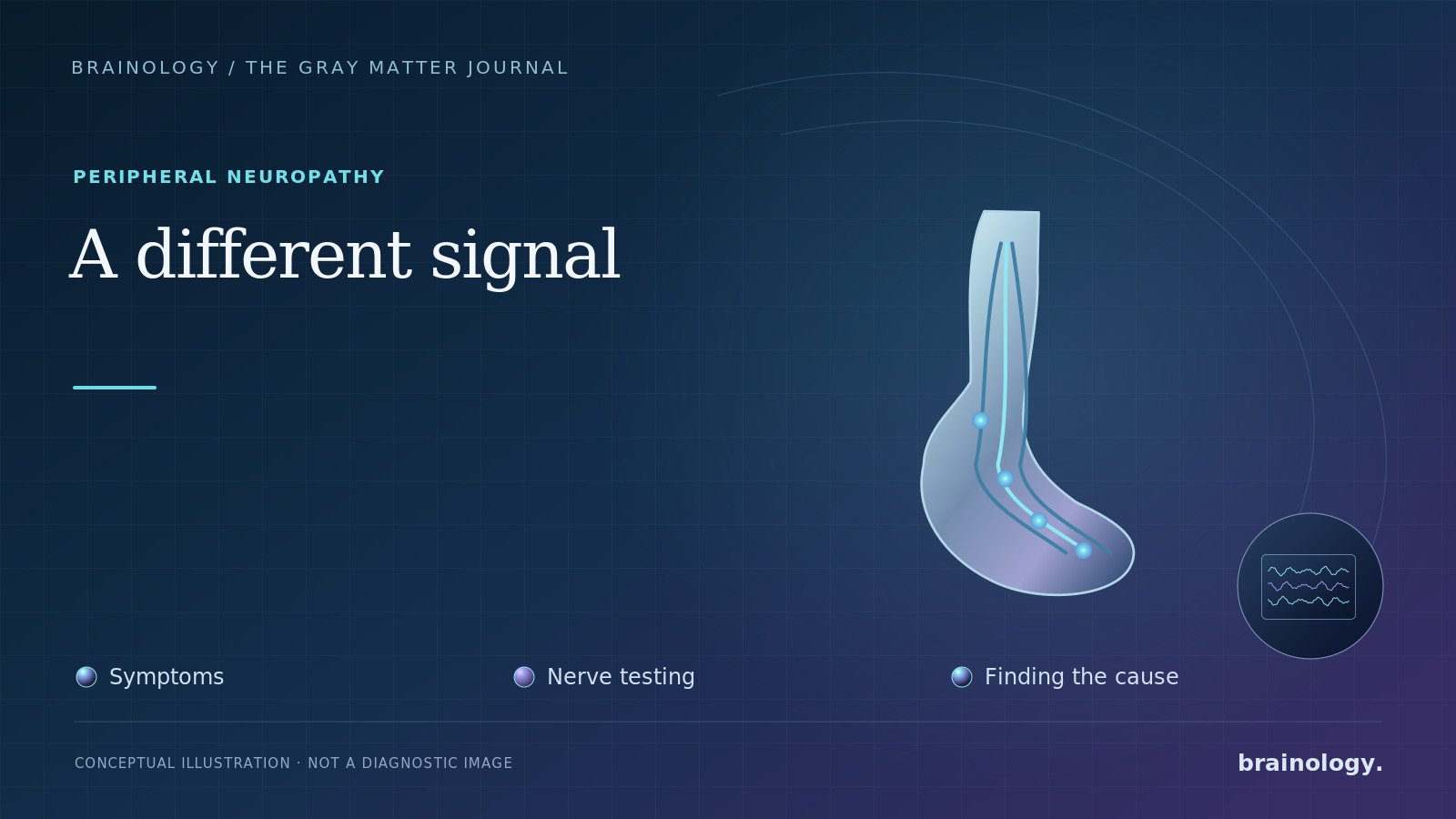
A foot that “falls asleep” after sitting awkwardly usually improves within minutes. Tingling, burning, reduced sensation, or electric-shock pain that persists or keeps returning is different. These symptoms may arise from peripheral neuropathy, a broad term for conditions that damage nerves outside the brain and spinal cord.
Peripheral neuropathy is not a single disease, and it is not synonymous with diabetes. Diabetes is an important cause, but nutritional deficiencies, medications, alcohol exposure, autoimmune disease, kidney disease, inherited conditions, infections, chemotherapy, and other problems can also injure peripheral nerves. Sometimes the cause remains unknown even after an appropriate evaluation.
The most useful question is therefore not simply, “Do I have neuropathy?” It is, “What pattern of nerve dysfunction is present, and what may be causing it?”
What Does Peripheral Neuropathy Feel Like?
Peripheral nerves carry sensory, motor, and autonomic signals. Symptoms depend on which fibers are affected.
Sensory symptoms may include:
- Numbness or reduced ability to feel temperature, pain, or vibration
- Tingling, prickling, burning, or “pins and needles”
- Shooting, stabbing, or electric pain
- Pain from light contact that would not normally hurt
- A feeling of wearing socks when the feet are bare
- Poor balance, especially in darkness or on uneven ground
Motor nerve involvement can cause weakness, muscle cramping, foot drop, loss of dexterity, or muscle wasting. Autonomic nerve involvement can affect sweating, blood pressure, digestion, bladder function, sexual function, or heart rate.
One common form, distal symmetric polyneuropathy, often begins in the toes and gradually moves upward in a “stocking” pattern. The fingers may become involved later. That pattern is clinically useful, but it does not establish the cause by itself.
Not Every Tingling Foot Is Neuropathy
Numbness and tingling can also result from a compressed nerve, a pinched spinal nerve, carpal or tarsal tunnel syndrome, poor circulation, a spinal cord disorder, migraine, multiple sclerosis, or other conditions. Sudden numbness on one side of the body, especially with facial droop, speech difficulty, vision loss, severe imbalance, or weakness, should be treated as a possible stroke. Call 911 even if the symptoms begin to improve.
The timing and distribution offer important clues. Slowly progressive symptoms in both feet suggest a different problem from abrupt one-sided numbness, rapidly ascending weakness, or symptoms confined to one nerve territory.
Why Finding the Cause Matters
Pain-relieving medication may reduce discomfort, but it does not necessarily address the process damaging the nerve. Some causes are treatable or modifiable. Examples include vitamin B12 deficiency, excessive exposure to certain vitamins or toxins, medication effects, uncontrolled glucose, thyroid or kidney disease, immune-mediated neuropathy, and nerve compression.
This does not mean every person needs an exhaustive panel of tests. Testing should be guided by the history, examination, and neuropathy pattern. An evidence-based American Academy of Neurology review identified blood glucose testing, vitamin B12 testing with metabolites when appropriate, and serum protein immunofixation as higher-yield studies in distal symmetric polyneuropathy. A clinician may add blood counts, metabolic testing, liver and kidney studies, thyroid testing, or other targeted tests based on the individual presentation.
Prediabetes and diabetes deserve particular attention, but an abnormal glucose result should not automatically end the investigation if the neurologic pattern is unusual. The American Diabetes Association’s 2026 Standards of Care recommend screening people with type 2 diabetes for diabetic peripheral neuropathy beginning at diagnosis and screening people with type 1 diabetes after five years, followed by at least annual assessment.
What Can EMG and Nerve-Conduction Testing Show?
Nerve-conduction studies measure how electrical signals travel through selected peripheral nerves. Needle electromyography, usually called EMG, evaluates electrical activity in muscles. Together, these tests can help determine whether symptoms reflect a large-fiber polyneuropathy, a compressed nerve, a nerve-root problem, a muscle disorder, or another neuromuscular condition. They can also help characterize nerve damage as primarily axonal or demyelinating, a distinction that may narrow the differential diagnosis.
However, a normal EMG and nerve-conduction study does not prove that all peripheral nerves are healthy. Standard electrodiagnostic testing primarily assesses larger nerve fibers. Small fibers, which carry pain and temperature signals and help regulate autonomic functions, may be affected even when conventional nerve-conduction results are normal.
When symptoms and examination findings suggest small-fiber neuropathy, a neurologist may consider additional testing such as a skin biopsy to measure intraepidermal nerve-fiber density or specialized autonomic testing. These tests are not necessary for every patient, and their results must be interpreted alongside the clinical picture.
Treatment Is More Than Masking Pain
Treatment has several possible goals:
- Identify and manage the underlying cause when possible.
- Reduce neuropathic pain without creating unacceptable side effects.
- Preserve strength, balance, mobility, sleep, and daily function.
- Prevent injuries when protective sensation is reduced.
For painful diabetic neuropathy, the American Academy of Neurology recommends considering several medication classes rather than assuming one drug is best for everyone. Medical history, kidney function, fall risk, mood, sleep, other medications, cost, and patient preferences can all affect the choice. A treatment that helps one person may be ineffective or poorly tolerated by another. The guideline also advises against using opioids for painful diabetic neuropathy because the potential harms outweigh their uncertain long-term benefit.
Physical therapy, balance training, appropriately selected exercise, footwear, and fall-prevention strategies may be important. People with reduced foot sensation should inspect their feet regularly because blisters, burns, or pressure injuries may go unnoticed. Supplements should not be started automatically. Too little of a nutrient can harm nerves, but excessive intake of certain supplements can also cause neurologic problems.
When Should You Seek Care?
Arrange a clinical evaluation if numbness, burning, tingling, weakness, or balance difficulty persists, progresses, disturbs sleep, causes falls, or interferes with work or daily activities. Earlier evaluation is especially important when symptoms are asymmetric, rapidly progressive, associated with significant weakness, or accompanied by unexplained weight loss or other systemic symptoms.
Seek emergency care for sudden one-sided neurologic symptoms, new loss of bladder or bowel control with weakness or numbness, rapidly ascending weakness, trouble breathing, or difficulty swallowing. These patterns can reflect conditions more urgent than a typical slowly progressive neuropathy.
The Bottom Line
Persistent numbness or tingling in the feet deserves more than a label. The pattern, examination, and carefully selected tests can help distinguish peripheral neuropathy from look-alike conditions, identify potentially treatable causes, and guide safer symptom management. A normal EMG may be reassuring in some respects, but it does not automatically exclude small-fiber disease.
At Brainology, neurologic evaluation is tailored to the individual rather than built around a single test result. If persistent sensory symptoms, weakness, or balance changes are affecting your life, a focused consultation can help determine the appropriate next step.
This article is for educational purposes only and is not a substitute for individualized medical advice, diagnosis, or emergency care.
References
- National Institute of Neurological Disorders and Stroke. Peripheral Neuropathy. Updated March 13, 2026.
- Mirian A, Aljohani Z, Grushka D, Florendo-Cumbermack A. Diagnosis and management of patients with polyneuropathy. CMAJ. 2023;195(6):E227-E233.
- England JD, Gronseth GS, Franklin G, et al. Practice Parameter: Evaluation of distal symmetric polyneuropathy: role of laboratory and genetic testing. Neurology. 2009;72(2):185-192.
- American Diabetes Association Professional Practice Committee for Diabetes. Retinopathy, Neuropathy, and Foot Care: Standards of Care in Diabetes—2026. Diabetes Care. 2026;49(Suppl 1):S261-S276.
- Price R, Smith D, Franklin G, et al. Oral and Topical Treatment of Painful Diabetic Polyneuropathy: Practice Guideline Update Summary. Neurology. 2022;98(1):31-43.
- Raicher I, Stump PRNAG, Harnik SB, de Oliveira RA, Baptestella C. Investigation of nerve fibers in the skin by biopsy: technical aspects, indications, and contribution to diagnosis of small-fiber neuropathy. Einstein (São Paulo). 2022;20:eRW5906.
- Centers for Disease Control and Prevention. Signs and Symptoms of Stroke. Updated October 24, 2024.
- National Institute of Neurological Disorders and Stroke. Guillain-Barré Syndrome. Updated March 13, 2026.