Wellness and Longevity Medicine
Zone 2 Cardio for Longevity: Helpful, but Not a Magic Number
Zone 2 cardio can be a sustainable way to build aerobic activity, but no clinical trial has shown that this specific zone uniquely extends life. The better goal is a balanced, repeatable exercise plan matched to your health, fitness, and preferences.
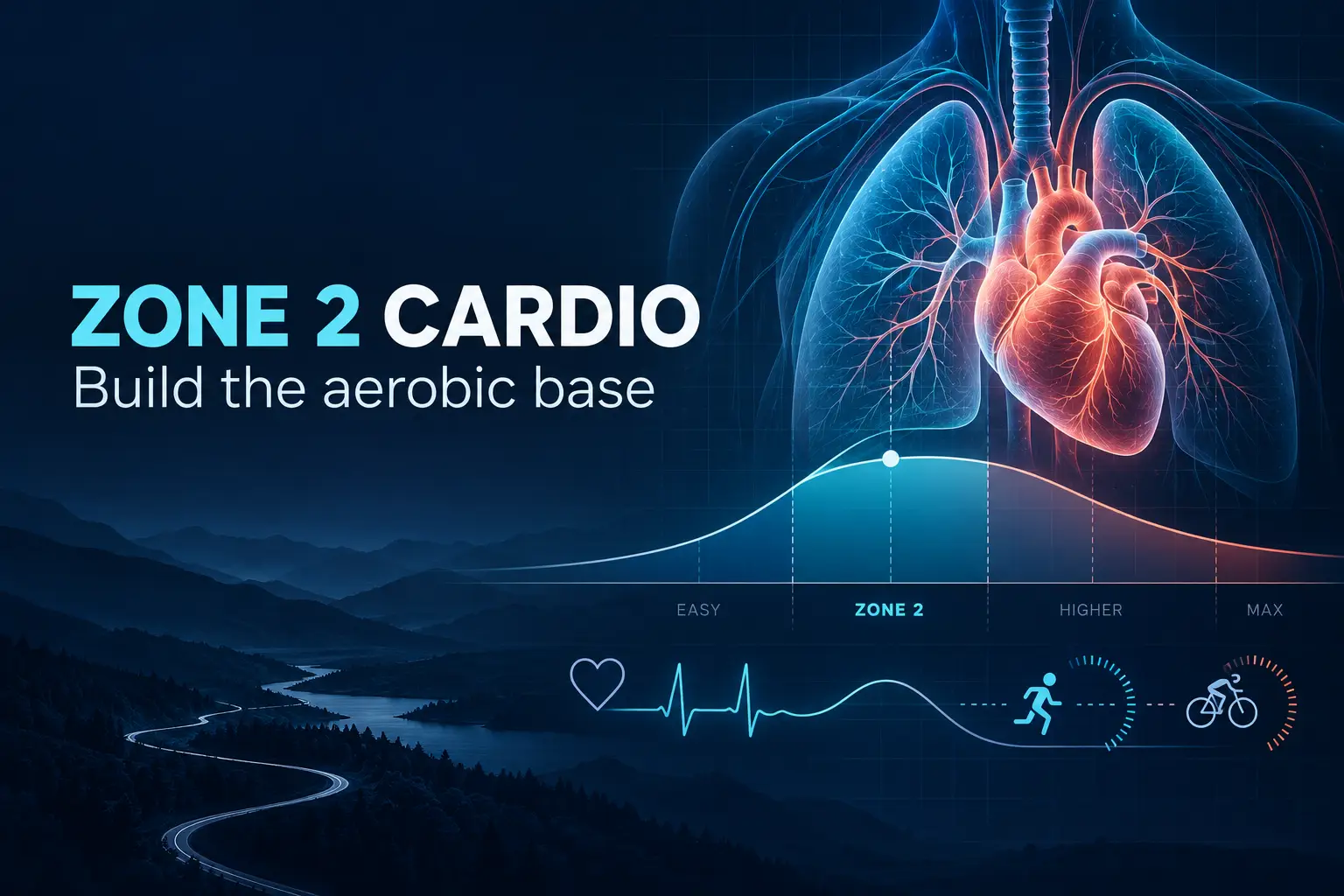
“Zone 2” has become one of the most popular phrases in longevity medicine. Podcasts, wearables, and fitness programs often describe it as the ideal intensity for improving mitochondria, burning fat, and extending life.
There is a useful idea inside the hype: steady aerobic exercise at a sustainable pace can improve fitness and help people accumulate meaningful activity without needing to recover from every session. But the stronger claim, that Zone 2 is uniquely optimal for longevity, is not established.
The practical question is not whether Zone 2 is good or bad. It is whether concentrating on one training zone helps you build a safe, consistent program or distracts you from the broader evidence on physical activity.
What Does “Zone 2” Actually Mean?
Exercise zones divide effort into intensity ranges. The problem is that there is no single universal Zone 2. A three-zone model, a five-zone watch display, and a laboratory model based on lactate or ventilatory thresholds do not necessarily identify the same workload.
Age-predicted maximum heart-rate formulas are estimates, not measurements. Fitness, medications, heat, dehydration, illness, sleep, stress, and normal biological variation can all affect heart rate. A wearable may be useful for tracking trends, but its colored zone is not a diagnosis or a precise measure of metabolism.
In research, Zone 2 is often described as low-intensity exercise below the first lactate threshold. In everyday practice, many people use the term more loosely for steady moderate exercise. The CDC’s “talk test” is a simpler guide to moderate intensity: you can talk, but not sing, while exercising. On a 0-to-10 effort scale, the CDC places moderate activity around 5 or 6.[1] This may approximate a sustainable aerobic effort, but it is not identical to laboratory-defined Zone 2.
What the Evidence Supports
Regular physical activity has clear health benefits. Current U.S. guidance recommends at least 150 to 300 minutes of moderate-intensity aerobic activity each week, or 75 to 150 minutes of vigorous activity, plus muscle-strengthening exercise on at least two days.[2] Smaller amounts still count, especially for someone who is currently inactive.
Moderate continuous exercise can improve cardiorespiratory fitness, blood-pressure control, insulin sensitivity, physical function, and exercise tolerance. Because it is usually sustainable, it may also be easier to repeat consistently. Brisk walking, easy cycling, recreational swimming, and elliptical training can all qualify when the effort is appropriate for the individual.
Cardiorespiratory fitness is strongly associated with health outcomes. A 2024 overview covering 199 cohort studies and more than 20.9 million observations found that fitness consistently predicted mortality and several chronic health outcomes.[3] The American Heart Association has called cardiorespiratory fitness a clinically important health marker.[4]
That does not prove Zone 2 itself causes longer life. Fitness is influenced by activity, genetics, health status, age, and other factors. Most mortality evidence is observational, so association and causation should not be treated as interchangeable.
What Has Not Been Proven
A 2025 review examined the popular claim that Zone 2 is the optimal intensity for mitochondrial and fat-oxidation adaptations. Its conclusion was direct: current evidence does not establish Zone 2 as the best intensity for these outcomes in the general population. The authors also noted that higher intensities may be important for maximizing cardiometabolic benefits when training time is limited.[5]
This does not make Zone 2 ineffective. It means “beneficial” is not the same as “superior.” Training at several intensities can stimulate overlapping adaptations. Burning a larger percentage of fat during a lower-intensity session also does not, by itself, prove greater long-term fat loss or longer lifespan.
Direct longevity trials are especially difficult. In the Generation 100 randomized trial, 1,567 adults ages 70 to 77 were assigned to moderate continuous training, high-intensity intervals, or national physical-activity recommendations for five years. Combined supervised training did not significantly reduce all-cause mortality compared with recommended activity, although there was a nonsignificant trend favoring the high-intensity group in exploratory comparisons.[6] The study supports exercise as part of healthy aging, but it does not identify one intensity as a guaranteed life-extension prescription.
A More Useful Way to Think About Zone 2
Zone 2 works best as one tool in a broader program.
1. Build consistency before precision
If you are inactive, the first goal is regular movement. Start with a duration and pace you can repeat. Ten or 15 minutes of walking several times per week may be more useful than an ambitious heart-rate target that leads to soreness, discouragement, or injury.
2. Use the talk test when technology becomes distracting
During moderate exercise, breathing should be clearly faster, but conversation should remain possible. If you cannot say more than a few words without pausing, the effort is vigorous by the CDC’s practical definition.[1]
The talk test is imperfect, but it prevents false precision. A watch reading should be interpreted alongside symptoms, perceived effort, medications, and clinical context.
3. Include more than steady cardio
Federal guidance includes aerobic and muscle-strengthening activity for a reason. Strength, balance, mobility, and power become increasingly important for maintaining independence and reducing fall risk with age.[2]
Some people may also benefit from appropriately prescribed vigorous exercise or interval training. Higher intensity is not mandatory for everyone, and it is not automatically safer or better. It should match the person’s cardiovascular risk, musculoskeletal health, fitness, and experience.
4. Progress one variable at a time
Increase frequency, duration, or intensity gradually rather than changing all three at once. A longer easy session and a shorter harder session create different stresses. Recovery, sleep, hydration, and pain should influence the next workout.
5. Choose an activity you will continue
The physiologically “perfect” program has little value if it is abandoned. Walking with a friend, cycling indoors, swimming, dancing, or using a rowing machine can all build aerobic capacity. Joint comfort, access, enjoyment, and schedule matter.
Do You Need VO2 Max or Lactate Testing?
Most people do not need laboratory testing to begin moderate exercise. The talk test, perceived effort, pace, and heart-rate trends are often sufficient for a general wellness program.
Cardiopulmonary exercise testing can be useful when a precise fitness measurement would change clinical care, when unexplained exercise intolerance needs evaluation, or when an athlete needs individualized training thresholds. Lactate testing may refine endurance programming, but it is not required to obtain the health benefits of regular activity.
Consumer estimates of VO2 max can be useful for following direction over time, but they are not interchangeable with a laboratory measurement. Avoid making medical conclusions from a single watch-generated score.
When to Seek Medical Guidance
Talk with a clinician before increasing intensity if you have known cardiovascular or pulmonary disease, concerning exercise symptoms, major mobility limitations, or a long period of inactivity with significant medical risk factors. Stop exercising and seek prompt evaluation for chest pressure, fainting, severe or unusual shortness of breath, a sustained rapid or irregular heartbeat with symptoms, or new neurologic symptoms.
People taking beta-blockers or other medications that alter heart rate may need a plan based more on symptoms and perceived exertion than standard heart-rate formulas.
Frequently Asked Questions About Zone 2 Cardio
What heart rate is Zone 2?
There is no single percentage that accurately defines Zone 2 for everyone. Wearable formulas are estimates, and laboratory thresholds do not always match consumer five-zone systems. The talk test and perceived effort can be more practical starting points.
How many minutes of Zone 2 should I do each week?
U.S. guidance recommends 150 to 300 minutes of moderate aerobic activity per week, or 75 to 150 minutes of vigorous activity, plus strength training. That guidance is broader than Zone 2 and should be adapted to health, fitness, symptoms, and recovery.
Is Zone 2 better than high-intensity interval training?
Neither is universally superior. Steady moderate work is sustainable for many people, while appropriately prescribed higher intensity can provide additional fitness benefits. A balanced program may use both when medically and physically appropriate.
The Longevity Bottom Line
Zone 2 cardio is a reasonable, sustainable way to accumulate aerobic exercise. It is not a proven biological switch for longevity, and no specific wearable zone can guarantee mitochondrial health or a longer life.
The most evidence-aligned plan is broader: move regularly, include both aerobic and strength work, use an intensity you can recover from, and add challenge gradually when it is safe. Long-term consistency matters more than chasing a perfect number.
Brainology’s physician-led longevity program can help patients place fitness, sleep, cardiovascular risk, cognition, and healthy-aging goals into one clinically responsible plan. Recommendations should be individualized, particularly when symptoms, medications, or chronic conditions affect exercise tolerance.
This article is for general educational purposes. It is not medical advice or a substitute for an individualized exercise or medical evaluation.
References
- Centers for Disease Control and Prevention. How to Measure Physical Activity Intensity. Updated December 4, 2025. Accessed October 9, 2026.
- Office of Disease Prevention and Health Promotion. Physical Activity Guidelines for Americans, 2nd Edition: Top 10 Things to Know. Updated November 19, 2025. Accessed October 9, 2026.
- Lang JJ, Prince SA, Merucci K, et al. Cardiorespiratory fitness is a strong and consistent predictor of morbidity and mortality among adults: an overview of meta-analyses representing over 20.9 million observations from 199 unique cohort studies. Br J Sports Med. 2024;58(10):556-566. doi:10.1136/bjsports-2023-107849.
- Ross R, Blair SN, Arena R, et al. Importance of Assessing Cardiorespiratory Fitness in Clinical Practice: A Case for Fitness as a Clinical Vital Sign. Circulation. 2016;134(24):e653-e699. doi:10.1161/CIR.0000000000000461.
- Storoschuk KL, Moran-MacDonald A, Gibala MJ, Gurd BJ. Much Ado About Zone 2: A Narrative Review Assessing the Efficacy of Zone 2 Training for Improving Mitochondrial Capacity and Cardiorespiratory Fitness in the General Population. Sports Med. 2025;55(7):1611-1624. doi:10.1007/s40279-025-02261-y.
- Stensvold D, Viken H, Steinshamn SL, et al. Effect of exercise training for five years on all-cause mortality in older adults: the Generation 100 study. BMJ. 2020;371:m3485. doi:10.1136/bmj.m3485.
- Lee DH, Rezende LFM, Joh HK, et al. Long-Term Leisure-Time Physical Activity Intensity and All-Cause and Cause-Specific Mortality: A Prospective Cohort of US Adults. Circulation. 2022;146(7):523-534. doi:10.1161/CIRCULATIONAHA.121.058162.