
Sleep Medicine
Snoring in San Antonio: When to See a Sleep Doctor
Learn when snoring is more than a nuisance, which warning signs suggest sleep apnea, and how a San Antonio sleep evaluation can help.
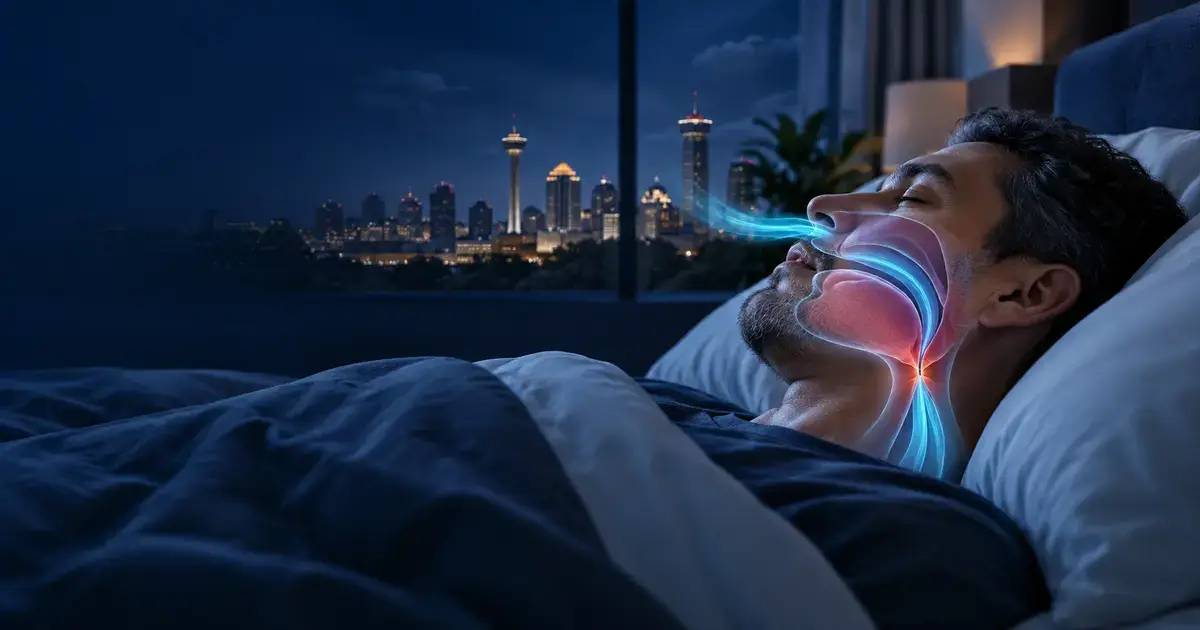
Occasional snoring is common, but loud, frequent snoring with breathing pauses, gasping, morning headaches, daytime sleepiness, or difficult-to-control blood pressure deserves a medical sleep evaluation. Snoring alone does not prove that someone has obstructive sleep apnea. It is a sound created by vibration in a narrowed upper airway, and the reason for that narrowing matters.
For adults seeking a snoring evaluation in San Antonio, the practical first step is not to buy a random anti-snoring device. It is to review symptoms, health risks, airway factors, and whether a home or in-lab sleep study is appropriate. A sleep physician can then recommend treatment based on what the testing actually shows.
Why do people snore?
During sleep, muscles in the tongue and throat relax. Air moving through a narrowed space can make nearby tissues vibrate. Nasal congestion, sleeping on the back, alcohol close to bedtime, sedating medicines, enlarged tonsils, jaw structure, weight, and age-related changes can all contribute.
The volume of snoring does not reliably measure the severity of a sleep disorder. A person can snore loudly without frequent breathing interruptions, while another person can have clinically important sleep apnea without dramatic snoring. This is one reason a partner's observations are helpful but are not a diagnosis.
When is snoring a possible sign of sleep apnea?
Obstructive sleep apnea occurs when the upper airway repeatedly narrows or closes during sleep. Breathing events can fragment sleep and sometimes lower oxygen. Warning signs that make testing more important include:
- Witnessed pauses in breathing
- Choking, gasping, or snorting during sleep
- Loud snoring on most nights
- Excessive sleepiness, drowsy driving, or unplanned naps
- Morning headaches or waking with a dry mouth
- Difficulty concentrating, irritability, or nonrestorative sleep
- Frequent nighttime urination
- High blood pressure, atrial fibrillation, heart disease, or prior stroke
Women may be more likely to report insomnia, fatigue, headache, or mood symptoms rather than classic loud snoring. People who live alone may not know that pauses or gasping occur. A focused history should therefore look beyond a single symptom.
Is simple snoring harmless?
Primary snoring means snoring without enough obstructive breathing events to meet criteria for sleep apnea. It may still disrupt a bed partner's sleep and affect relationships, but treatment choices differ from those used for confirmed apnea.
The distinction matters because a product that quiets sound does not necessarily keep the airway open or correct oxygen changes. Feeling less embarrassed about snoring is valuable, but it is not the same as documenting that sleep-related breathing is healthy.
What happens during a snoring evaluation?
A sleep evaluation begins with the pattern of symptoms. The clinician may ask when snoring started, whether it is worse on the back or after alcohol, whether anyone has observed pauses, and how alert the patient feels during the day. Medication use, nasal obstruction, reflux, weight changes, neck and jaw anatomy, cardiovascular history, and prior sleep testing can all influence the plan.
The examination may include the nose, mouth, jaw, tongue, tonsils, neck, heart, lungs, blood pressure, and neurological features when relevant. No single airway measurement can diagnose or exclude sleep apnea. The history and examination help determine the right test.
Home sleep apnea test or in-lab sleep study?
A home sleep apnea test can be appropriate for selected adults who have a meaningful likelihood of uncomplicated obstructive sleep apnea. It usually records breathing flow or effort, oxygen level, heart rate, and body position. Because most home systems do not directly measure sleep stages, results must be interpreted in clinical context.
In-lab polysomnography records additional signals, often including brain waves, eye movements, muscle activity, breathing, oxygen, heart rhythm, and leg movements. It may be preferred when a home study is negative or unclear despite ongoing concern, when another sleep disorder is suspected, or when medical conditions make a simpler test less reliable.
Brainology's sleep medicine service in San Antonio can help select the study that fits the clinical question. The goal is not to order the most complicated test for everyone. It is to obtain enough accurate information to guide care.
What if a home test is negative?
A negative home test does not always end the evaluation. Home testing can underestimate breathing-event frequency when wake time is counted as recording time, sensors lose contact, or apnea appears mainly during a sleep stage that the device does not measure. If symptoms and risk remain concerning, a sleep physician may recommend an in-lab study.
Conversely, a technically adequate home test showing clear obstructive events may provide sufficient information to begin a treatment discussion. Interpretation should include oxygen patterns, event type, position, symptoms, and medical history rather than one number alone.
How is snoring treated?
Treatment depends on whether testing shows primary snoring, obstructive sleep apnea, another breathing disorder, or an additional sleep problem. Options may include:
- Addressing nasal obstruction or allergies
- Avoiding alcohol or sedating substances near bedtime when medically appropriate
- Changing sleep position in position-dependent cases
- Weight-focused care when relevant
- Positive airway pressure therapy
- A custom oral appliance for appropriate adults
- Selected airway procedures after a structured evaluation
Over-the-counter mouthpieces, chin straps, sprays, and phone apps vary widely. Some may reduce sound for selected users, but they do not substitute for diagnostic testing when apnea is possible. A custom oral appliance should be fitted by a qualified dental professional working with the sleep clinician, with follow-up testing when used to treat apnea.
When should you seek care promptly?
Do not wait for a routine appointment if sleepiness is causing near-misses while driving or operating equipment. Stop driving and arrange safe transportation. Seek urgent medical help for severe shortness of breath while awake, chest pain, fainting, new neurological symptoms, or a sudden severe headache. A sleep study is not an emergency test.
Preparing for a San Antonio sleep appointment
Bring a current medication list, prior sleep reports, and any PAP or wearable data that may be relevant. If a partner has observed events, their description can be useful. A short phone recording may demonstrate the sound pattern, but it cannot diagnose apnea and should never be recorded in a way that delays urgent help.
Write down bedtime, wake time, naps, caffeine and alcohol timing, and the situations in which sleepiness is worst. A one- or two-week sleep diary often reveals whether insufficient sleep, an irregular schedule, insomnia, or another factor is contributing.
Snoring evaluation near Shavano Park and San Antonio
Brainology evaluates adults from San Antonio, Shavano Park, Stone Oak, the Medical Center area, and nearby communities. Local language should never replace an individualized medical decision. A useful visit connects the symptoms to the right testing pathway and explains what the results do and do not show.
Request a Brainology consultation if disruptive snoring, witnessed breathing pauses, or daytime sleepiness is affecting health or safety.
This article is for general education and does not replace diagnosis, emergency care, or individualized medical advice. Testing and treatment recommendations depend on medical history, symptoms, examination, and study results.
References
- National Heart, Lung, and Blood Institute. Sleep Apnea. Updated January 9, 2025.
- National Heart, Lung, and Blood Institute. Sleep Apnea Diagnosis.
- American Academy of Sleep Medicine. Clinical Practice Guideline for Diagnostic Testing for Adult Obstructive Sleep Apnea. Journal of Clinical Sleep Medicine. 2017.